If you have ever left a physical therapy appointment feeling rushed, unheard, or handed a sheet of generic exercises, you know how discouraging that experience can be. You came in with real pain or a real goal, and you deserved more than a few minutes of attention. That frustration is common among active adults in Santa Ana who simply want to move well again.
This guide explains what high-quality physical therapy in Santa Ana, CA can look like, which conditions it can address, and how to know whether a clinic is the right fit for you. It also shows how Motion IQ Physical Therapy approaches recovery and performance with time, honesty, and individual attention. By the end, you will know what to expect and what questions to ask before you begin.
What Makes Motion IQ Physical Therapy Different in Santa Ana?
Most patients do not struggle because they lack motivation. They struggle because the care they receive is too brief, too generic, or too hands-off. Motion IQ Physical Therapy was built to change that experience.
40-Minute One-on-One Sessions
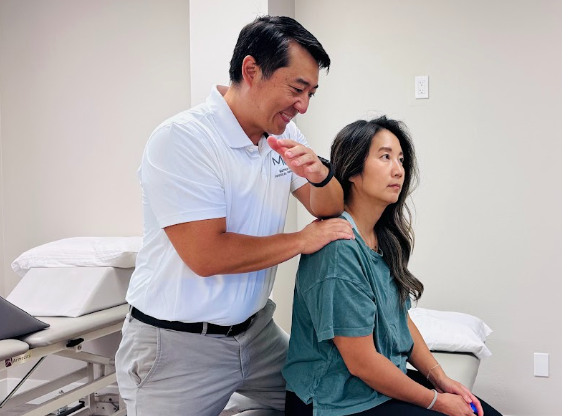
Many clinics schedule visits in short blocks of 15 to 20 minutes, which leaves little room for a thorough assessment, hands-on treatment, and exercise coaching in the same visit. At Motion IQ, every session is 40 minutes of one-on-one time with your therapist. That extra time means your therapist can listen to your story, assess how you move, treat the problem, and teach you what to do next.
Every Session Led by a Licensed Physical Therapist
Your entire session is conducted by a licensed physical therapist, never overseen by a non-licensed professional. You see the same expert who evaluated you, and that consistency helps your plan adapt as your body responds.
Direct Text Access Between Visits
Questions rarely wait until your next appointment. You may wonder whether a certain exercise is supposed to feel a particular way or whether a flare-up is normal. At Motion IQ, you have direct access to your physical therapist by text message between sessions, so you are never left guessing.

When Should You See a Physical Therapist?
Many people wait months hoping pain will fade on its own. Sometimes it does, but often the underlying movement problem remains and the pain returns. Physical therapists are trained to identify why a problem started, not just where it hurts.
Consider booking an evaluation if you notice any of the following:
Pain that lingers longer than a couple of weeks or keeps coming back
Stiffness or weakness that limits work, training, or daily tasks
Pain that changes how you move, sit, sleep, or exercise
A recent injury, procedure, or surgery that needs a guided recovery
A goal such as returning to running, lifting, or sport that feels out of reach
A desire to prevent injury before a season, event, or significant life change
You do not need to be an athlete to benefit. Physical therapy supports office workers, parents, runners, lifters, and anyone who wants to stay active and strong as they age.
Which Conditions Can Physical Therapy Help?
Motion IQ Physical Therapy treats a wide range of orthopedic and sport-related concerns. Your plan is built around your specific diagnosis, your movement patterns, and the activities that matter most to you.
Neck, Mid Back, and Low Back Pain
Spine pain is one of the most common reasons people seek care. Motion IQ helps with neck pain, mid back pain, low back pain, sciatica, and postural issues. Treatment often combines hands-on techniques with targeted exercise to improve joint motion, reduce muscle guarding, and build the strength that supports your spine during daily life.
Shoulder, Elbow, Wrist, and Hand Concerns
Upper body pain can affect everything from lifting a coffee cup to sleeping through the night. Care is available for shoulder pain, rotator cuff pain or tears, shoulder impingement, frozen shoulder, tennis elbow, golfer's elbow, elbow pain, wrist pain, and carpal tunnel symptoms. The goal is to calm irritation, restore motion, and rebuild strength so you can return to your routine with confidence.
Hip, Knee, Foot, and Ankle Problems
Lower body pain often comes from how the hips, knees, and feet work together. Motion IQ treats hip pain, hip impingement (FAI), labral tears, groin pain, knee pain, runner's knee, IT band syndrome, meniscus injuries, ACL injuries, hamstring strains, shin splints, ankle sprains, Achilles tendinopathy, and plantar fasciitis. Your therapist looks beyond the painful spot to find the movement habits or weak links that may be driving the problem.
Arthritis, Tendinopathy, and Strength Loss
Joint arthritis and tendon irritation can make you feel like your body is working against you. Physical therapy can help you manage symptoms, keep joints moving, and build strength. For adults concerned about muscle and strength loss with age, a progressive exercise plan supports healthy aging and helps you stay capable and independent.
Dizziness and BPPV
Benign paroxysmal positional vertigo (BPPV) causes brief spinning sensations with head movements, such as rolling over in bed. It is a mechanical issue in the inner ear, and physical therapists can assess it and use specific positioning maneuvers to address it. If you are experiencing dizziness, Motion IQ can help determine whether this type of care fits your situation.
Do You Have Jaw Pain, TMJ Symptoms, or Headaches?
Jaw pain can be exhausting. It can interfere with eating, talking, sleeping, and concentrating, and many people move between providers without clear answers. What most people do not realize is that physical therapy can treat TMJ disorders — and conservative care options for the jaw and face can be genuinely difficult to find. This is a specialty that most physical therapy clinics simply do not offer, which is why Motion IQ Physical Therapy places a particular focus on it.
How Physical Therapy Supports TMJ and Orofacial Pain
The temporomandibular joint (TMJ) connects your jaw to your skull and works closely with the muscles and joints of your neck. Jaw pain, clicking, limited mouth opening, and certain headaches can all be related to this region. Conservative treatments such as manual therapy and therapeutic exercise are commonly recommended before more invasive options for many people with TMJ disorders, according to the National Institute of Dental and Craniofacial Research.
Motion IQ treats TMJ pain, orofacial pain, and headaches with a thorough assessment of your jaw, neck, and posture. Treatment may include manual therapy, myofascial release, soft tissue mobilization, and exercises designed to improve how your jaw and neck move together.
Michael Ko, PT, DPT, CFMT
Owner Michael Ko, PT, DPT, CFMT holds a Certified Functional Manual Therapist (CFMT) credential and is pursuing advanced craniofacial certification to deepen his TMJ expertise. That ongoing training reflects a genuine commitment to a condition many patients feel has been overlooked by the broader healthcare system.
Is There Physical Therapy Made for Jiu-Jitsu and Grappling Athletes?
If you train Brazilian jiu-jitsu, wrestling, or MMA, you know your body takes a beating. Neck strain, shoulder irritation, tight hips, and sore knees often come with the territory. Many grappling athletes keep training through pain because they fear a clinic will simply tell them to stop.
Motion IQ Physical Therapy offers a dedicated service for jiu-jitsu injuries, wrestling injuries, MMA injuries, and grappling injuries across combat sports. The aim is to keep you on the mat whenever it is safe, and to help you return stronger when it is not.
Michael Ko, PT, DPT, CFMT is a jiu-jitsu blue belt himself. That firsthand experience means he understands how these injuries actually happen — the pressure on the jaw from a tight headlock, the shoulder strain from a scramble, the hip load from guard work. That biomechanical understanding shapes how he evaluates and treats grappling athletes in a way that a generalist clinic simply cannot replicate.
Sports Physical Therapy for Every Athlete
You do not need to grapple to benefit from sport-focused care. Motion IQ supports runners, lifters, weekend players, and competitive athletes through sports physical therapy, performance physical therapy, athletic training, and sports medicine. Common goals include:
Returning to running after pain or injury
Returning to sport after an ACL, meniscus, or ankle injury
Building strength to prevent the next injury
Improving mobility and flexibility for better performance
Performance and recovery are connected. When you address weak links early, you often train better and recover faster.
How Does Physical Therapy Help Before and After Surgery?
Surgery and medical procedures are only part of recovery. What you do before and after can shape how well you move months later.
Prehab: Building strength and mobility before surgery or before a new season helps you start from a stronger position.
Post-procedure recovery: Early guided movement helps you restore motion safely while respecting healing tissues.
Post-surgery rehab: A progressive plan rebuilds strength, balance, and confidence step by step.
Return to work: Whether your job is physically demanding or involves long hours at a desk, your plan can target the specific demands you face every day.
Your therapist coordinates your exercises with guidance from your surgeon or physician, so your plan fits your recovery timeline.
What Treatments Will You Receive?
Hands-on care and active movement work best together. Passive treatment may calm pain for a while, but exercise teaches your body to maintain the improvement. Your plan at Motion IQ Physical Therapy may include:
Manual therapy: Skilled hands-on techniques to improve tissue and joint motion
Joint mobilization and manipulation: Targeted movement of stiff joints to restore mobility
Myofascial release and soft tissue mobilization: Techniques to ease tight, sensitive muscle and connective tissue
Instrument-assisted soft tissue mobilization (IASTM): Specialized tools used to address tissue restrictions
Mobility work: Drills that expand your usable range of motion
Neuromuscular re-education: Retraining how your muscles activate and coordinate
Therapeutic exercise: Progressive strengthening and conditioning matched to your goals
The American Physical Therapy Association (APTA) emphasizes that exercise and active movement are central to physical therapy care for musculoskeletal problems. That is why your sessions are never just a quick treatment table visit. You leave with a clear understanding of what you are doing and why it matters.
Why Does Motion IQ Use a Cash-Based Model?
Motion IQ Physical Therapy is a cash-based physical therapy practice, and that is a deliberate choice. It allows the clinic to prioritize quality, time, and personalized care over patient volume. Without pressure to fit as many patients as possible into an hour, your therapist can stay fully present for the entire 40 minutes.
This model also supports transparency. You know who is treating you, how long you will have, and what your plan is designed to accomplish. If you have questions about how this works for your situation, the team is glad to walk you through it during your consultation.
What Should You Expect at Your First Visit?
Starting something new can feel uncertain, especially if past experiences left you disappointed. Here is a straightforward picture of how it works at Motion IQ Physical Therapy.
Start with a Free Initial Consultation
Your first step is a free initial consultation. You can share your history, describe what you want to get back to, and ask questions about the approach. It is a chance to decide whether the clinic feels right before you commit to a plan.
Your Evaluation and Individualized Plan
During your evaluation, your therapist assesses how you move, where you are limited, and what may be contributing to your symptoms. Your individualized plan is built around your specific goals and activities — whether that means pain-free workdays, longer runs, or a confident return to the mat. As you progress, your plan evolves with you, and you can text your therapist whenever questions come up.
Learn More About the Clinic
If you would like to know more about the clinic and its philosophy, visit the About page. You can also browse the Services page or return to the Motion IQ Physical Therapy home page to see how care is structured. For more educational reading, visit the Motion IQ blog.
Take the Next Step Toward Moving Better
You should not have to settle for rushed appointments or generic exercise sheets. Whether you are dealing with neck or back pain, recovering from surgery, living with jaw pain or TMJ disorders, or trying to stay on the mat as a jiu-jitsu, wrestling, or MMA athlete, you deserve a therapist who listens and has the time to help.
Motion IQ Physical Therapy in Santa Ana is here to guide you with 40-minute one-on-one sessions, licensed care from start to finish, and direct access to your therapist between visits. Book your free initial consultation today and take the first step toward recovery and stronger performance.
